



Before we judge Gen Z, are we willing to put the generation that raised them in the witness box?
- Saturday | 25th July, 2026
Vote for BJP in urban local bodies" poll for "triple engine" govt in UP: Adityanath
UP: Man booked for attempting to rape 5-year-old girl
Congress to mark 100 days of Bharat Jodo Yatra with concert in Jaipur
BJYM, Hindu outfits put off planned protest march at AMU
Karachi battles gas crisis; residents face unannounced load shedding, 2-hr gas supply in a day
Elderly man in judicial custody dies during treatment in UP hospital
Himachal Pradesh skittle Haryana for 46, take 200-run lead on Day 1
Pak court grants protective bail to PM Shehbaz"s son Suleman in money laundering case
British Library celebrates India ties with exhibition on Hampi
Nine policemen suspended after suspect dies in police custody in UP
Gangster"s property attached in UP"s Pratapgarh district
Maoists torch construction company vehicles in Jharkhand’s Chatra district
Sino-India border situation "generally stable": China on Yangtse clash
Babar Azam not taking advice from seniors, claims Shahid Afridi
Qlite Global launches their exclusive Grand Experience Centre
"Disillusioned with central leadership": Sikkim BJP president says he has resigned
2001 attack anniversary: Ready to guard new Parliament if directed, say CRPF heroes
Class 2 student dies after scuffle with fellow students in UP
Three killed in accident in UP"s Lakhimpur KheriLakhimpur Kheri (UP), Dec 13 (PTI) Three motorcycle borne youths were killed and "
Abandoned girl child from Assam adopted by Spanish professor
By Animesh Ikshit
Rapid growth in unsecured retail credit is pushing millions of Indian families into severe debt traps as consumers increasingly borrow to fund lifestyle upgrades, grand weddings, and traditional social obligations.
According to the Reserve Bank of India’s (RBI) Financial Stability Report, India’s household debt rose to 41.3% of GDP in 2022-23, up from 37.6% in 2021-22. While housing loans remain significant, unsecured consumer credit, credit cards, and personal loans are expanding at a much faster pace, squeezing monthly household cash flows.
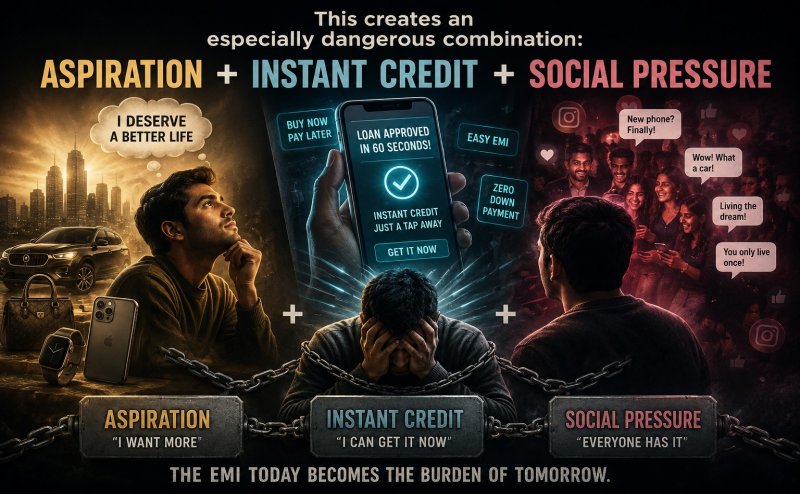
Easy access to instant digital loans, credit card Equated Monthly Instalments (EMIs), and "Buy Now, Pay Later" schemes has normalized consumer borrowing. Instead of asking whether they can afford a purchase, consumers increasingly evaluate affordability based solely on the size of the monthly EMI.
· Middle-Class Families: Borrowers across urban and rural sectors taking multiple small loans for cars, electronics, and holidays.
· Gen-X & Aging Parents: Individuals in their late 40s and 50s taking on heavy debt to fund children`s marriages, social ceremonies, or lifestyle expectations.
· Grieving Families: Households forced by social pressure to fund elaborate death feasts and post-funeral rituals through high-cost loans, often immediately following medical emergencies.
· Credit Cards: Bank of India data shows outstanding credit card balances crossed ₹2.5 lakh crore in 2024, with total cards in circulation exceeding 100 million.
· Wedding Industry: Families are taking personal loans to fund celebrations in an industry estimated by Jefferies at $130 billion, often servicing short multi-day events with years of future income.
· Retail & Personal Credit: Total retail bank credit crossed ₹50 lakh crore in 2024, led primarily by unsecured personal loans.
.jpg)
Why Is This Becoming a Risk?
Borrowing is no longer restricted to productive assets like homes or education. The combination of social media pressure, instant credit approval, and cultural expectations forces families to finance non-productive consumption.
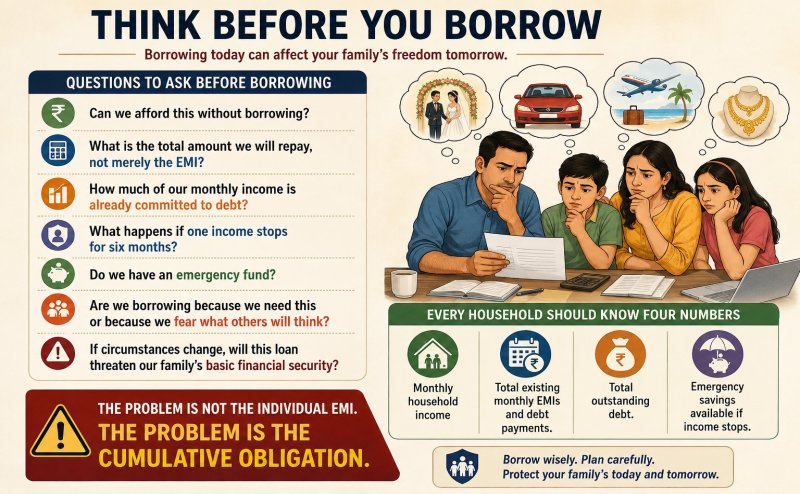
When multiple small EMIs accumulate, a minor income disruption, job loss, or medical emergency can trigger a debt spiral. Beyond financial ruin, unmanageable debt drives severe mental health crises, anxiety, and household breakdown, in extreme cases escalating to suicide when harassment, social shame, and relentless repayment pressure become overwhelming. Borrowers are often forced to take new loans simply to service old debt or liquidate long-term assets.
How Are Regulators and Experts Responding?
In November 2023, the RBI increased risk weights on unsecured consumer loans and bank lending to NBFCs to curb unchecked credit expansion. Financial advisors recommend that households evaluate their total debt obligations, maintain emergency savings, and avoid leveraging future income for temporary social validation.

Your support to NYOOOZ will help us to continue create and publish news for and from smaller cities, which also need equal voice as much as citizens living in bigger cities have through mainstream media organizations.